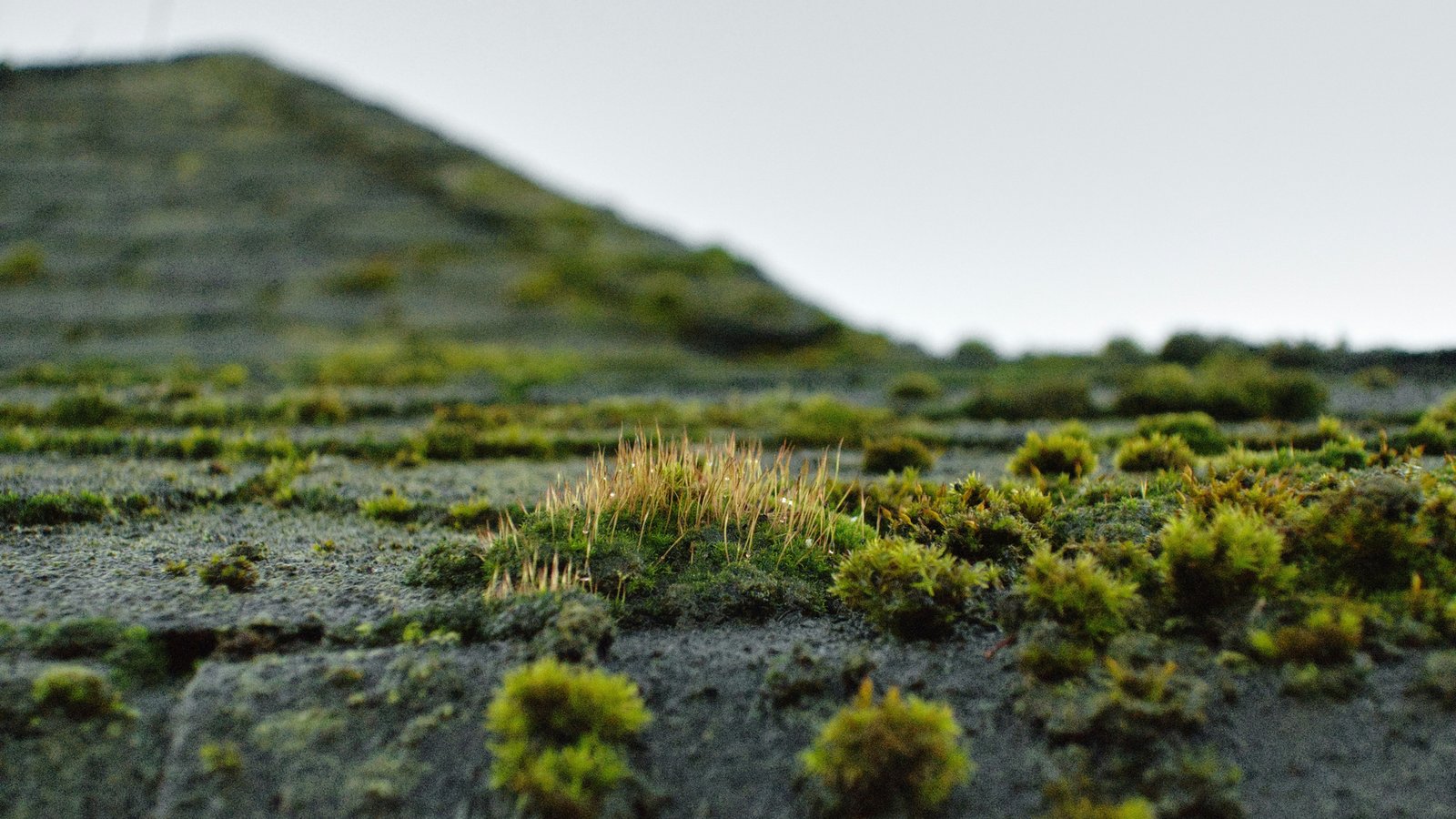
Have you noticed something green growing on your roof? Maybe it started as a small patch on the shaded side. Maybe it’s spread into thick, spongy mats that make your whole roof look aged and neglected. It’s possible that you’re looking at roof moss — and if you’re a Virginia homeowner, ignoring it is one of the most expensive mistakes you can make.
Virginia’s humid summers, mature tree canopy, and four-season climate create the perfect environment for moss to thrive on roofs. The good news? It’s entirely manageable if you understand what causes it and take action before the damage becomes irreversible.
This guide walks through everything you need to know: what moss is, how it damages your roof, how to remove it safely, and how to keep it from coming back.
What Is Moss?
Moss is a small, ancient, non-vascular plant that has existed for thousands of years. Unlike most plants you’re familiar with, moss has no true roots, no flowers, and no seeds. It reproduces through tiny spores carried by wind, birds, and squirrels. Instead of roots, moss uses hair-like structures called rhizoids to anchor itself to surfaces — including your roof shingles.
Why Moss Loves Virginia Roofs
Moss is an opportunistic plant. It grows anywhere three conditions are met:
- Moisture — Virginia’s humid climate provides plenty. Rain, dew, and ambient humidity keep roof surfaces damp, especially on north-facing slopes that get minimal direct sunlight.
- Shade — Mature trees in established Virginia neighborhoods (think Fairfax Station, Lake Ridge, Montclair, and communities near the Occoquan River and Potomac) cast shade that keeps roofs from drying quickly after rain.
- Organic debris — Leaves, pine needles, and twigs accumulate on roofs and in gutters, trapping moisture and providing a nutrient base for moss spores to germinate.
Asphalt shingles — the most common roofing material in Virginia — are particularly vulnerable because they’re porous and retain moisture. As shingles age and develop tiny cracks from UV exposure, they become even more hospitable to moss colonization. Wood shake roofs are even more susceptible due to their naturally porous surface.
Moss vs. Algae vs. Lichen: What’s Actually on Your Roof?
Virginia homeowners often confuse three different types of plant-like organisms that grow on roofs:
- Moss — spongy, green or brown, three-dimensional growth. It physically lifts shingles and causes real structural damage.
- Algae (Gloeocapsa magma) — appears as black or dark streaks running down shingles. It feeds on the limestone filler in asphalt shingles but is primarily a cosmetic issue, not structural.
- Lichen — crusty or leafy patches. A composite organism (fungus + algae) that can cause micro-cracks if it grows beneath shingle edges.
If you see thick, green, fuzzy patches, that’s moss — and it needs to be addressed.
The Moss Life Cycle on Your Roof
Moss spores typically land on your roof in fall or spring when Virginia’s rainfall is heaviest. They settle between shingle gaps, in roof valleys, and on shaded sections. Once germinated, moss develops stems and rhizoids that anchor it to the shingle surface. Over time, multiple plants grow together into dense mats that can be several inches thick.
During hot, dry Virginia summers, moss goes brown and dormant — but it’s not dead. When moisture returns (rain, dew, humidity), it rehydrates and turns green again, continuing its growth cycle year after year.
How Does Moss Damage Your Roof?
Moss may look soft and harmless, but it causes progressive, cumulative damage to your roof. The damage builds slowly over years — but by the time moss is visibly thick, structural damage may already be underway.
Moisture Retention: The Root of the Problem
Your roof is designed to shed water quickly. The slope, the shingle overlaps, the flashing — all engineered to move rain off the roof and into the gutters as fast as possible.
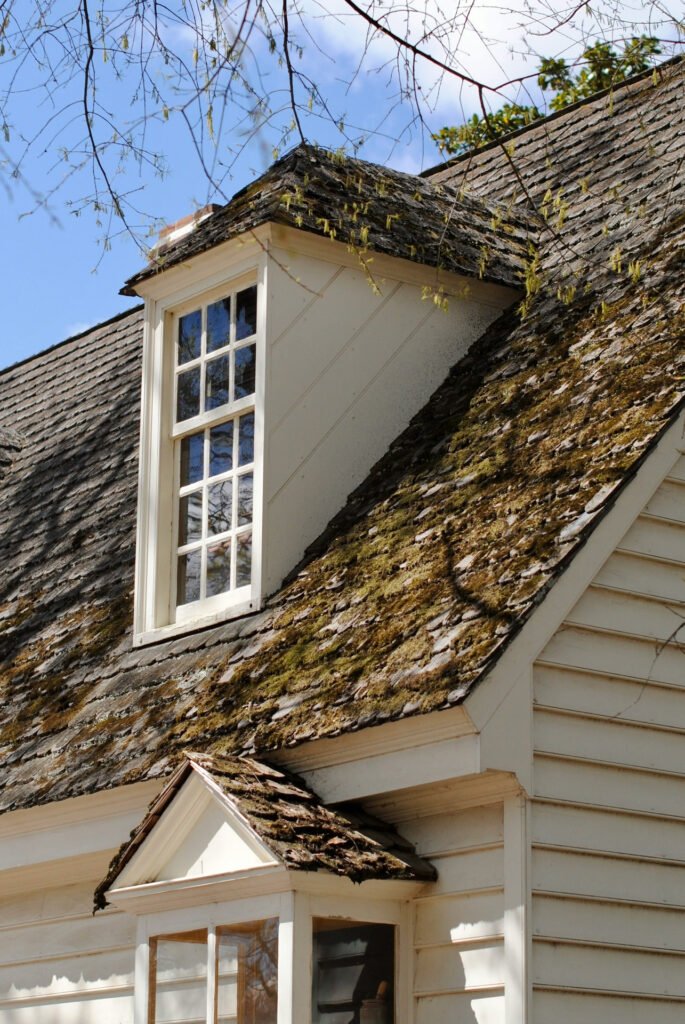
Moss reverses that design. It acts like a sponge, absorbing rainwater and holding it against the roof surface for extended periods. This sustained moisture:
- Softens asphalt shingles, making them prone to cracking and warping
- Accelerates the breakdown of the granule coating that protects shingles from UV rays
- Encourages fungal growth that degrades sealant and flashing
- Hastens the decomposition of wood shake roofs
Shingle Lifting and Water Infiltration
As moss grows, it works its way between overlapping shingles and under shingle edges. The expanding moss body physically pushes shingles upward, causing:
- Broken adhesive seals between shingle layers, creating gaps where water can enter
- Lifted or curled shingle edges that catch wind and can tear off during Virginia’s thunderstorms
- Water pathways under shingles to the wooden decking below
- Decking rot and mold as moisture reaches structural wood components
- Interior leaks that can damage ceilings, walls, and insulation
Once water reaches the roof deck, you’re looking at potential rot, mold growth, and costly interior repairs — all from a plant that started as a tiny spore between two shingles.
Granule Loss and UV Damage
Asphalt shingles are covered with tiny granules — small pebbles that make shingles sturdier, fire-resistant, and protected from UV radiation. These granules are not decorative; they’re the shingle’s primary defense against sun damage.
Moss loosens these granules as its rhizoids penetrate the shingle surface. The trapped moisture further degrades the asphalt coating beneath. You’ll often see the evidence in your gutters — excessive granule buildup means your shingles are losing their protective layer.
Once granules are gone, the exposed asphalt degrades rapidly under sunlight. The shingle’s effective lifespan shortens significantly, and this damage is irreversible. Cleaning moss won’t restore lost granules.
Drainage Blockage and Ice Dams
Thick moss mats disrupt your roof’s water-shedding function by blocking the flow of water down roof slopes. This creates standing water — something no roof is designed to handle. Moss fragments shedding into gutters contribute to clogs, causing water backup under shingles.
In winter, moss-trapped moisture can contribute to ice dam formation in colder Virginia regions. Ice dams form when warm attic air melts snow on the roof, which then refreezes at the colder eaves. The trapped water backs up under shingles and into your home.
The Progressive Damage Timeline
Moss damage is cumulative — it gets worse each year:
| Timeline | What’s Happening |
|---|---|
| Year 1-2 | Spores germinate in shaded, damp areas. Small green patches appear between shingles. |
| Year 2-4 | Moss thickens and spreads. Begins lifting shingle edges. Granule loss starts. |
| Year 4-6 | Moss covers significant roof area. Shingle edges visibly curled. Water infiltration risk increases. Decking may soften. |
| Year 6+ | Extensive moss with deep penetration. Shingles may be irreversibly damaged. Professional inspection may reveal need for roof replacement. |
If moss has been growing unchecked on your roof for several years, removing it may reveal that the underlying shingles are already past their functional life. In these cases, roof replacement — not cleaning — is the right solution.
How to Remove Roof Moss
Removing moss requires care. The wrong method can cause more damage than the moss itself. Before starting, assess the situation from the ground with binoculars. If moss covers more than a third of your roof, shingles are curling or cracked, or the roof is steep or high, call a professional.
Method 1: Manual Removal (Soft Brushing)
For small to moderate moss growth, manual removal is the least invasive approach:
- Wet the moss with a garden hose on low pressure, spraying from the peak down
- Use a long-handled soft-bristle brush to gently sweep moss off, working from top to bottom only
- Never brush upward — this lifts shingle edges and causes damage
- Never use metal tools — wire brushes and metal scrapers scratch shingles and remove granules
- Rinse gently with low-pressure water
This works best for moss that hasn’t deeply penetrated between shingles. For established growth, combine with a chemical treatment.
Method 2: Chemical Treatments
Bleach and water solution (recommended by the Asphalt Roofing Manufacturers Association):
- Mix equal parts household chlorine bleach and water (or 1 part bleach to 2 parts water, as This Old House’s Tom Silva recommends)
- Wet nearby plants and cover with plastic sheeting for protection
- Spray the solution on affected areas with a garden sprayer
- Allow 15-30 minutes dwell time — this kills moss at the cellular level
- Rinse with low-pressure water from a garden hose
- Dead moss will dry up and blow off within days
Zinc sulfate (recommended by Oregon State University Extension):
- Mix 3 pounds of zinc sulfate monohydrate powder in 9 gallons of water
- Treats 600-1,000 square feet of roof
- Do NOT use if you have copper gutters, downspouts, or flashing — zinc sulfate corrodes copper
Eco-friendly alternatives:
- Potassium salts of fatty acids — biodegradable, soap-based products that kill moss by disrupting cell membranes
- Distilled white vinegar with a few drops of dish soap — spray on, wait 2-3 days, brush off
Commercial products: Wet & Forget, BioAdvanced Moss and Algae Killer, and Moss B Ware (zinc sulfate granules) are all effective options formulated specifically for roof use.
Method 3: Professional Soft Washing
For extensive moss, steep roofs, or homeowners uncomfortable with heights, professional soft washing is the recommended method. Major shingle manufacturers endorse this approach:
- Pre-treatment inspection for damaged shingles and open seams
- Low-pressure application of a diluted sodium hypochlorite solution
- 15-20 minute dwell time to kill moss, algae, and lichen at the root
- Gentle low-pressure rinse that removes dead growth without disturbing granules
- Optional preventive treatment with zinc/copper strips
Professional soft washing protects your manufacturer warranty and typically includes a roof inspection. In Virginia, professional moss removal costs $400-$1,000 depending on roof size and infestation severity.
⚠️ Never Pressure Wash Your Roof
This cannot be emphasized enough: never use a pressure washer on an asphalt shingle roof. High-pressure water:
- Strips protective granules from shingles (irreversible damage)
- Drives water under and between shingles, causing immediate leakage risk
- Doesn’t kill moss roots — growth returns within months, often worse
- Voids most manufacturer warranties
- Can take years off your roof’s life in a single afternoon
If a contractor shows up with a pressure washer and no chemical treatment, send them home.
What NOT to Use
- Laundry detergent (Tide, etc.) — it’s a de-greaser that pulls oils from shingles, causing granule loss
- Wire brushes or metal scrapers — scratch and damage shingle surfaces
- Pressure washers — as above
How to Prevent Roof Moss
Removing moss is only half the battle. Without changing the conditions that allowed it to grow, moss will return — often within a season or two. Here’s how to make your roof inhospitable to moss long-term.
1. Trim Trees and Increase Sunlight
The single most effective prevention step is letting more sunlight reach your roof:
- Trim overhanging branches at least 6-10 feet back from the roof
- Thin the canopy above the roof to increase light and airflow
- Focus on north-facing slopes — they get the least sun and are most vulnerable
- Remove branches that drop leaves, pine needles, or twigs
In Virginia’s established neighborhoods with mature tree canopy, tree management is the difference between a moss-free roof and a constant battle.
2. Install Zinc or Copper Strips
Zinc or copper strips installed along the roof ridge provide passive, long-term moss prevention. When rain flows over the metal, it carries tiny metallic ions down the roof surface — and zinc and copper are toxic to moss and algae.
- Zinc strips: More affordable, $300-$600 installed
- Copper strips: More effective but pricier; visually subtle on most roofs
- For long roof slopes, install additional strips every 8-10 feet for even coverage
- Install after cleaning the roof — strips prevent new growth but don’t remove existing moss
3. Consider Algae-Resistant Shingles at Replacement
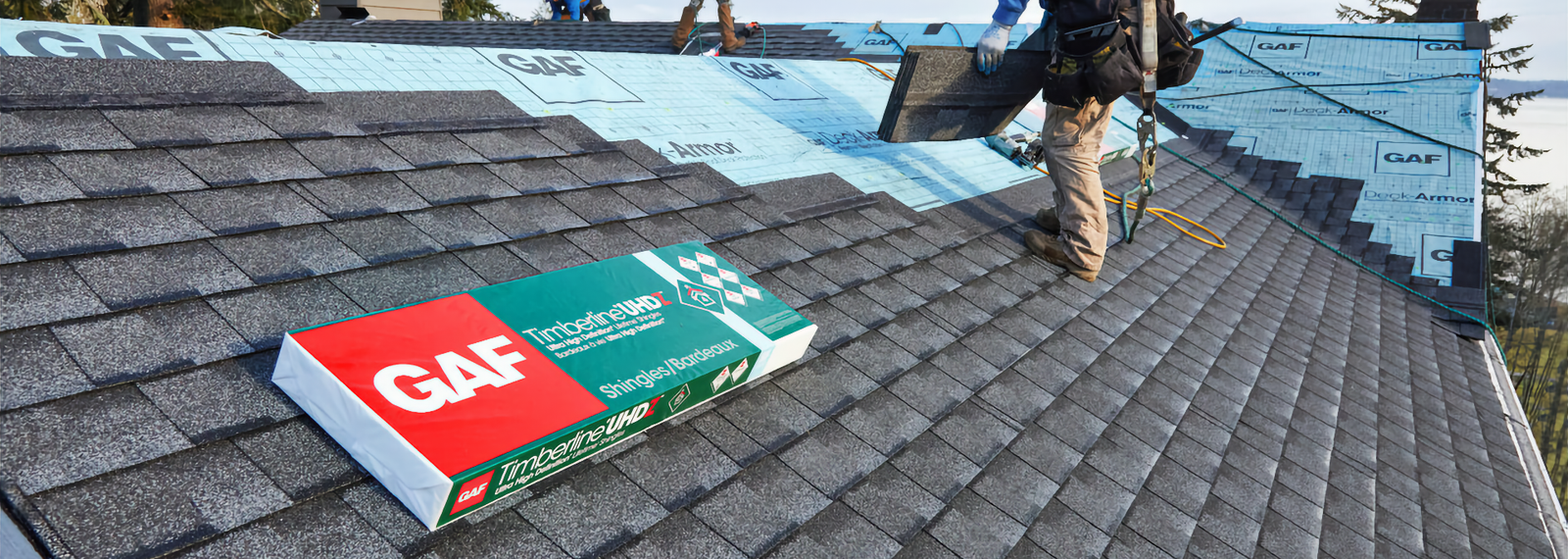
If your roof is due for replacement, install algae-resistant (AR) shingles with copper granules embedded in the surface. GAF Timberline HDZ shingles feature StainGuard Plus™ technology, providing up to 25 years of protection against blue-green algae — preventing algae growth entirely for the cost of a minor upgrade.
While the primary focus of GAF Timberline HDZ shingles is on algae resistance, they are also effective against moss. The same features that help prevent algae growth contribute to reducing the likelihood of moss accumulation, as both organisms thrive in similar conditions.
4. Keep Gutters Clean
Clogged gutters create the standing water conditions moss loves. Clean gutters at least twice a year (spring and fall), or quarterly if you have trees nearby. Consider installing gutter guards to reduce debris accumulation. Check that downspouts drain at least 6 feet from your foundation.
5. Schedule Regular Roof Inspections
Have your roof professionally inspected annually or bi-annually. Early moss detection means easier removal and less damage. Inspect after heavy storms for debris accumulation, and check your attic annually for water stains, daylight through roof boards, or mold.
6. Clean Your Roof Every 1-3 Years
In Virginia’s wet, humid climate, schedule professional roof cleaning every 1-3 years — leaning toward the shorter end if your home is shaded. A few hundred dollars of cleaning every few years can prevent a premature roof replacement costing $10,000 or more.
Virginia Homeowner Maintenance Checklist
- Trim tree branches 6-10 feet from roof
- Clean gutters twice yearly (quarterly if near trees)
- Inspect roof for moss each spring and fall
- Schedule professional cleaning every 1-3 years
- Install zinc or copper strips after cleaning
- Check attic for moisture signs annually
- Consider AR (algae-resistant) shingles at next roof replacement
- Keep roof clear of leaves, pine needles, and debris
Don’t Let Moss Shorten Your Roof’s Lifespan
Roof moss isn’t a cosmetic issue — it’s a maintenance issue that, left unaddressed, leads to shingle damage, water infiltration, and premature roof replacement. Virginia’s climate makes every roof vulnerable, but the prevention strategies in this guide are proven and effective.
If you’re seeing moss on your roof, the time to act is now. Every season you wait, the moss grows thicker, the shingle damage deepens, and the repair costs climb.
Premier Remodelers has been helping Virginia homeowners protect and improve their homes for years. Whether you need a roof inspection to assess damage, or a full roof replacement with algae-resistant shingles, our team delivers quality workmanship with honest assessments.
Contact Premier Remodelers today for a free roof inspection. We’ll assess the condition of your roof, identify any moss-related damage, and recommend the right next steps — whether that’s cleaning, repair, or replacement. No pressure, no upselling, just honest expertise from a Virginia roofing team you can trust.
Premier Remodelers — Virginia’s trusted home exterior remodeling company. Roofing, siding, and windows.
Contact Information:
Phone: (540) 497-8567
Email: info@premierremodelers.com
Website: https://www.premierremodelers.com
Follow us on Facebook

Leave a Reply